

Arthritis is a condition which causes pain, stiffness, and swelling in the joints. The most common type of arthritis is osteoarthritis, which wears away the cartilage that cushions the ends of bones. Osteoarthritis is caused by wear and tear on the joints over time. It is a progressive disease that gets worse as people age. Another type of arthritis is rheumatoid arthritis, an autoimmune disease that attacks the joints. Other types of arthritis include psoriatic arthritis, which develops in some people with psoriasis, and gout, which is caused by a buildup of uric acid crystals in joints of the big toe. All these types of arthritis have painful symptoms. Osteoarthritis is the type that most often affects the facet joints of the spine.
What are facet joints?
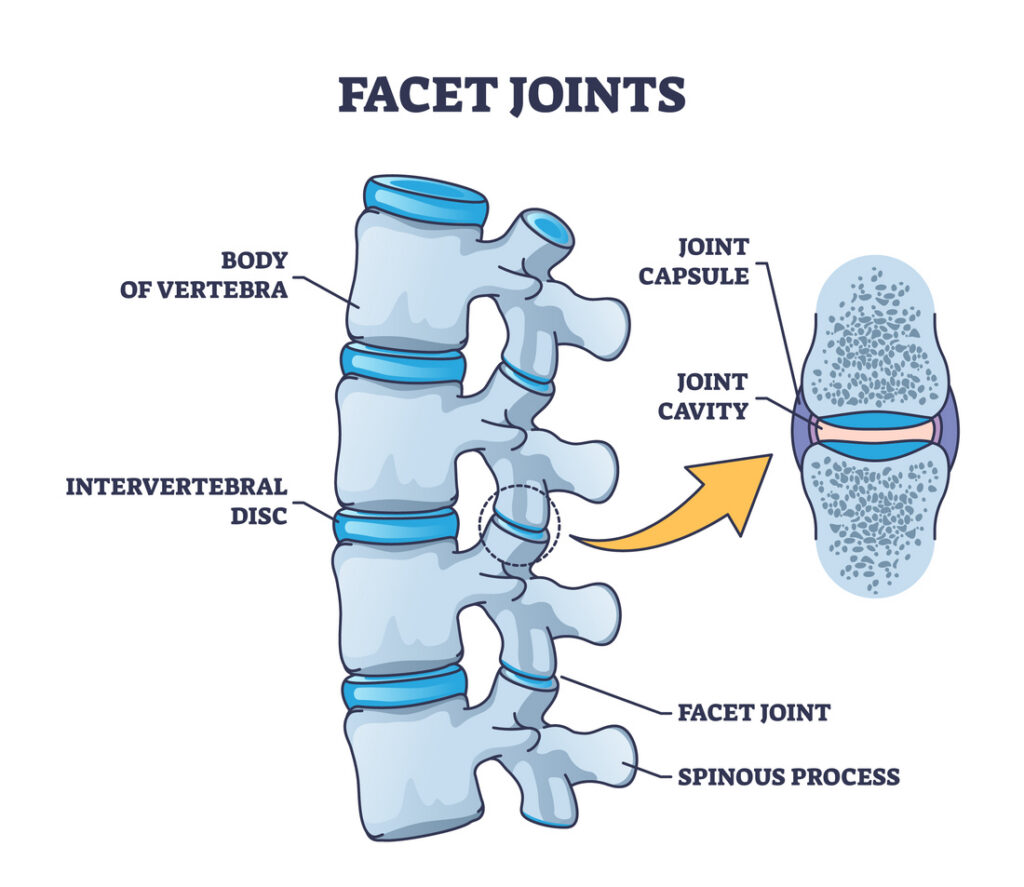
Facet joints are the joints in the spine located on the back of each side of every vertebra. These joints allow the spine to move. Facet joints provide both flexibility and stability for the spine. When arthritis occurs in the facet joints, the cartilage that protects the ends of the joints wears away. Symptoms include pain, swelling, enlargement of the joints, loss of flexibility, and the formation of bone spurs (osteophytes) that may compress the nerves or the spinal cord.
Nonsurgical Treatment Options for Arthritis of the Facet Joints
Treatment generally begins with conservative options. Several may be done at the same time. Heat and cold therapy is usually recommended for treating any joints with arthritis pain, including facet joints. Cold therapy is often used when pain flares up since it numbs pain and restricts blood flow to the area. Moist heat therapy can relax muscles and reduce spasms, ease stiffness, increase blood flow, and enable more flexibility and better mobility. Alternating between cold and heat can be beneficial.
Medications to ease arthritis pain include acetaminophen for pain reduction and nonsteroidal anti-inflammatory medication (NSAIDs), such as ibuprofen and naproxen, to reduce swelling and joint inflammation. Topical gels and numbing patches applied to the areas of pain can bring temporary relief. Prescription strength NSAIDs and muscle relaxers may be helpful if something stronger is needed.
The next treatment step may be epidural steroid injections given into or around the facet joints to relieve pain and inflammation. These injections are given by physicians who specialize in these procedures.
Physical therapy may be recommended for facet joint disorders. Therapy may include a combination of stretches, low impact exercises, and strengthening the core and back muscles to reduce stress on the facet joints.
Surgical Options
Surgery may be considered in cases where there have been degenerative changes to the facet joints, severe nerve pain, or inflammation and compression of nerves or the spinal cord. Laminectomy is a decompression surgery that provides more room in the spinal canal for the nerves and spinal cord. Surgical repair may be necessary if there are fractures or dislocations of the facet joints due to trauma. A facetectomy is surgery to remove parts of the facet joint or bone spurs that are causing compression.
Atlanta Brain and Spine Care
Our neurosurgeons work with an extensive team of pain management specialists and licensed physical therapists to make an individualized treatment plan to meet the needs of each patient. Contact us to schedule a consultation.
